Useful Resources for Your Greek Island Trip
- Find accommodation in Greece – hotels, apartments and villas on Booking.com
- Book tours and activities in Greece via Viator
- Find guided experiences and day trips via GetYourGuide
- Compare car hire prices in Greece via DiscoverCars
Ohi Day, observed on 28 October every year, is one of Greece’s two major national holidays and marks the day in 1940 when Greek Prime Minister Ioannis Metaxas refused Mussolini’s ultimatum to allow Axis forces to enter the country.
The word “ohi” (also spelled oxi or ochi) simply means “no” in Greek. That single refusal drew Greece into the Greco-Italian War and set off a wider Axis campaign against the country. Greeks regard the moment as an act of defiance that defined national identity, and the holiday is marked each year with military parades, school processions, and wreath-laying ceremonies across every town and city.
What Is Ohi Day in Greece?
Ohi Day — also written as Oxi Day or Ochi Day — is a Greek national public holiday held on 28 October. It commemorates Greece’s refusal, in the early hours of 28 October 1940, to submit to Axis occupation. Within hours of Metaxas delivering his answer, Italian forces crossed the Albanian border into northern Greece.
Despite being heavily outnumbered, the Greek army pushed the Italians back deep into Albanian territory during the winter of 1940–41. The campaign is a source of lasting national pride and is the central reason the date carries such weight in Greece today.
The Greek phrase “ohi” (no) became both the name of the holiday and a widely recognised symbol of resistance. You will hear it referred to as Ohi Day, Oxi Day, or Ochi Day — all three spellings refer to the same event and the same Greek word.
How Is 28 October Celebrated in Greece?
Celebrations on 28 October Greece follow a consistent pattern across the country, though the scale varies by city. The main elements are:
- Military and student parades: Major parades take place in Athens, Thessaloniki, and other cities. The Athens parade passes through central streets and draws large crowds. Thessaloniki hosts one of the largest parades in the country. Student parades typically happen in the morning before or after the main military march.
- Flag-raising ceremonies: Schools, government buildings, and public institutions fly the Greek flag. Wreath-laying at war memorials is common in towns of all sizes.
- Church services: Orthodox liturgies are held across Greece to mark the occasion.
- Blue and white: Shops, homes, and public spaces are often decorated in the Greek national colours.
The mood is solemn in parts — this is a day of remembrance — but also festive. Schools and government offices are closed. Many businesses follow suit, though tourist-facing services generally remain open.
What Does Ohi Mean in Greek?
Ohi (οχι) is the standard Greek word for “no.” It is pronounced roughly as “OH-hee.” The alternative spellings oxi and ochi appear in English because there is no single agreed transliteration from the Greek alphabet. All three mean the same thing. When Greeks say “ohi” in the context of 28 October, the word carries the full weight of that 1940 refusal.
The phrase entered wider European consciousness during the 2015 Greek debt referendum, when “oxi” appeared on placards and in headlines worldwide. But in Greece itself, the association with 28 October 1940 runs far deeper.
Do Ferries Run on Ohi Day?
Yes. Ferry services in Greece operate normally on 28 October. Ohi Day is a public holiday, but it does not affect the ferry network the way it affects banks, schools, or government offices. Routes between islands and to the mainland run on their standard schedules.
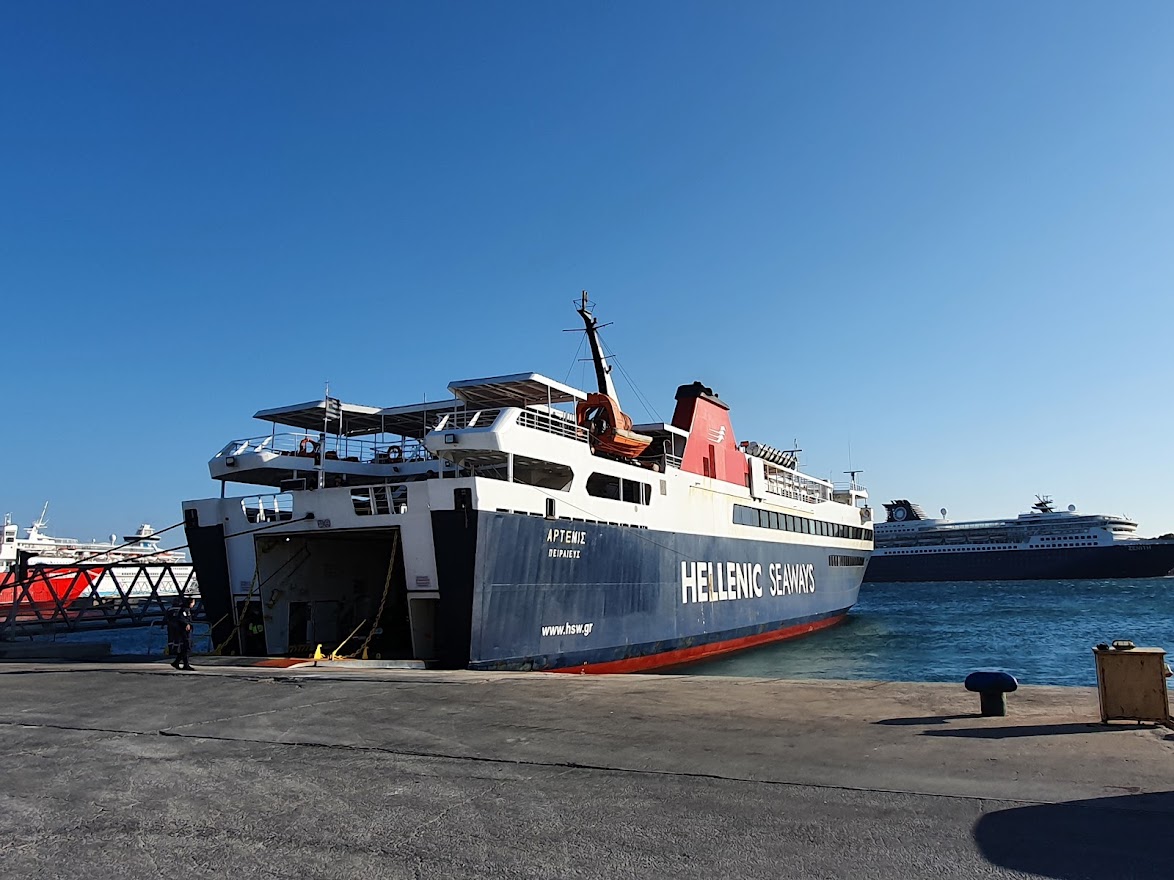
If you are travelling around Greece on 28 October, you can book your ferry tickets through Ferryscanner, which searches across operators and routes. Bear in mind that October is the shoulder season, so some routes may have reduced frequency compared to summer. Always check the current timetable before travelling.
Ports can be busier than usual around the holiday weekend, particularly on routes connecting Athens (Piraeus) to the islands, as Greek families often travel to join celebrations in their home towns or villages.
Travelling Around Greece on Ohi Day
Late October is a reasonable time to visit Greece. Crowds are thinner than in summer, prices are lower, and the heat is manageable. The main practical consideration on 28 October itself is that many shops, banks, museums, and government offices will be closed or operating reduced hours. Tourist attractions and restaurants in major cities typically remain open.
If you are in Athens on or around the holiday, it is worth watching the parade or visiting the city’s central neighbourhoods while they are decorated. A 2 days in Athens itinerary gives you enough time to see the main sites and still catch a ferry to the islands.
For island hopping in October, the Sporades in central Greece remain accessible and quieter than the Aegean’s more popular islands. You can reach Skiathos, Skopelos, and Alonissos from Volos on the mainland, with ferries running throughout the autumn season. Useful route guides include:
- Sporades Islands Ferry Ports (Skiathos, Skopelos, Alonissos)
- Volos Ferry Port: Routes And Ferry Companies Sailing from Volos
- How to get from Volos to Alonissos by ferry
- How to get from Alonissos to Skiathos by ferry
- Alonissos Ferry Port Guide
If you want to explore beyond a single island, the ferry connections around the Sporades make it straightforward. More detail on what you can reach from each departure point:
- Greek Islands Near Skopelos You Can Reach By Ferry
- Greek Islands Near Skiathos You Can Reach By Ferry
- Greek Islands Near Alonissos You Can Reach By Ferry
- Greek Islands Near Volos You Can Reach By Ferry
Book ferry tickets in advance for travel around the holiday weekend — not because capacity is typically an issue in October, but because prices and schedules are easier to manage when confirmed ahead of time. Ferryscanner lets you compare all available routes and operators in one search.
If you are documenting your trip, the best Greece captions for Instagram and Greek island photos has suggestions for travel posts from across the country.
Frequently Asked Questions
What is Ohi Day in Greece?
Ohi Day (28 October) is a Greek national public holiday marking the anniversary of Prime Minister Metaxas’s refusal to allow Axis forces into Greece in 1940. It is one of Greece’s most significant national commemorations, observed with military parades, school processions, and ceremonies across the country.
What does “ohi” mean in Greek?
Ohi (also written oxi or ochi) is the Greek word for “no.” In the context of 28 October, it refers specifically to Greece’s refusal of Mussolini’s ultimatum in 1940. The spelling varies in English because there is no fixed transliteration, but all versions refer to the same word and event.
Is Ochi Day (28 October) a public holiday in Greece?
Yes. 28 October is a full public holiday in Greece. Schools, banks, government offices, and many businesses are closed. Parades are held in cities and towns across the country. Tourist-facing services, restaurants, and ferries generally continue to operate.
Do Greek ferries run on 28 October?
Yes. Ferry services are not affected by the Ohi Day public holiday and run on their normal schedules. Some routes may have reduced frequency in October compared to the summer peak season, so check current timetables before booking.
What is the difference between Ohi Day, Oxi Day, and Ochi Day?
There is no difference. All three names refer to the same Greek national holiday on 28 October. The variation comes from different ways of transliterating the Greek word “οχι” into the Latin alphabet. In Greece itself, the holiday is universally known as Ohi Day (Επέτειος του «Όχι»).
Is it worth visiting Greece on 28 October?
Yes, if you want to see the parades and national celebrations. Athens and Thessaloniki have the largest events. Late October is also a good time to travel in terms of weather and crowds. Plan around the fact that many non-tourist businesses will be closed on the day itself.