Useful Resources for Your Greek Island Trip
- Find accommodation in Greece – hotels, apartments and villas on Booking.com
- Book tours and activities in Greece via Viator
- Find guided experiences and day trips via GetYourGuide
- Compare car hire prices in Greece via DiscoverCars
Milos island is one of the most geologically dramatic destinations in the Cyclades, with more than 70 beaches, a volcanic landscape, and a ferry connection to Athens that makes it straightforward to visit.
Most travellers arrive at Adamas port in Milos, the island’s main harbour and the practical base for exploring everything the island offers. From here, you can hire a car, join a boat tour, or simply walk into the village to get your bearings. This guide covers the best things to do in Milos island, how to get there, and what to expect when you arrive.
Things To Do in Milos Greece
Milos rewards visitors who explore beyond the beaches. The island has a compact but varied interior, historic villages, ancient catacombs, and one of the most accessible boat-tour circuits in the Cyclades. Below are the key Milos activities and sights worth your time.
Sarakiniko Beach
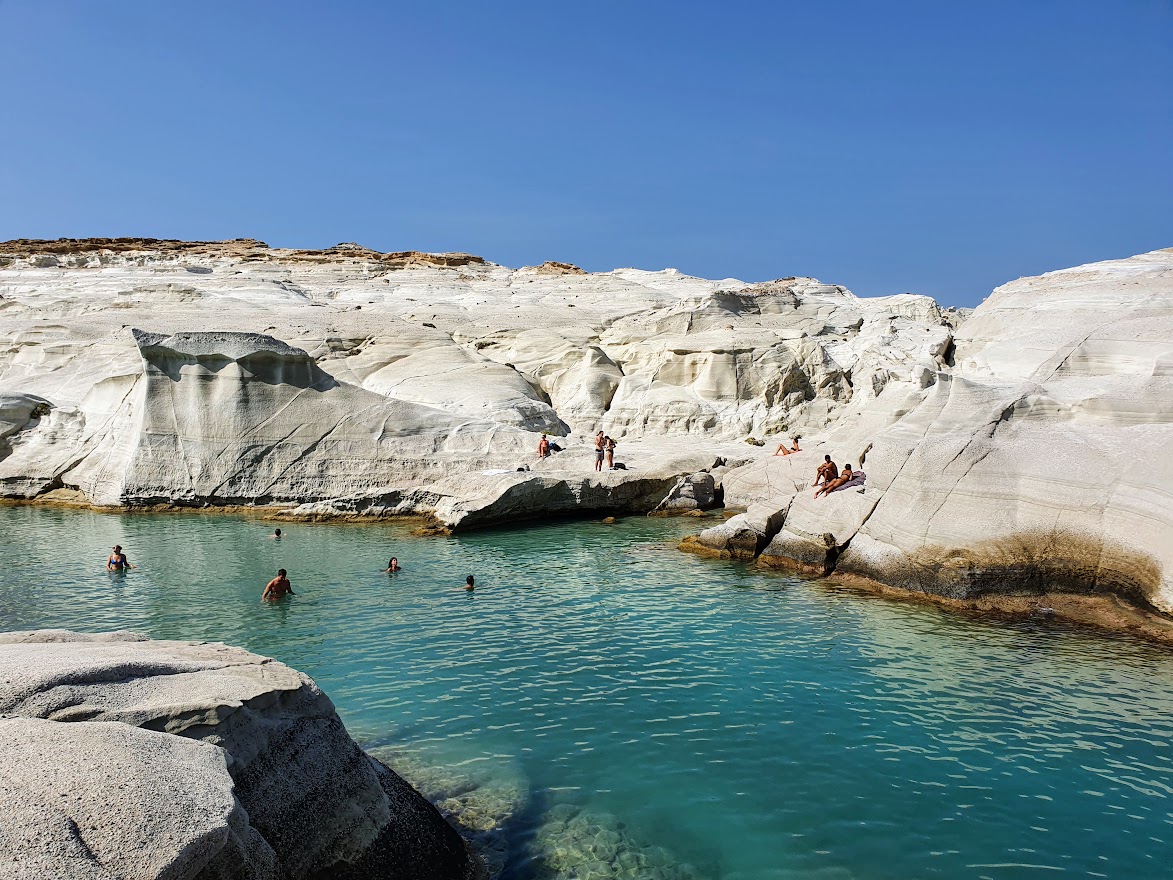
Sarakiniko is Milos’s most photographed spot — a stretch of white volcanic rock eroded into smooth, lunar formations that extend into a sheltered cove. The rock is bright enough to be uncomfortable without sunglasses at midday. Swimming is good in the cove, but the main draw is the landscape itself. Arrive early to avoid the crowds; by late morning the area fills with day-trippers and tour groups.
Kleftiko Bay
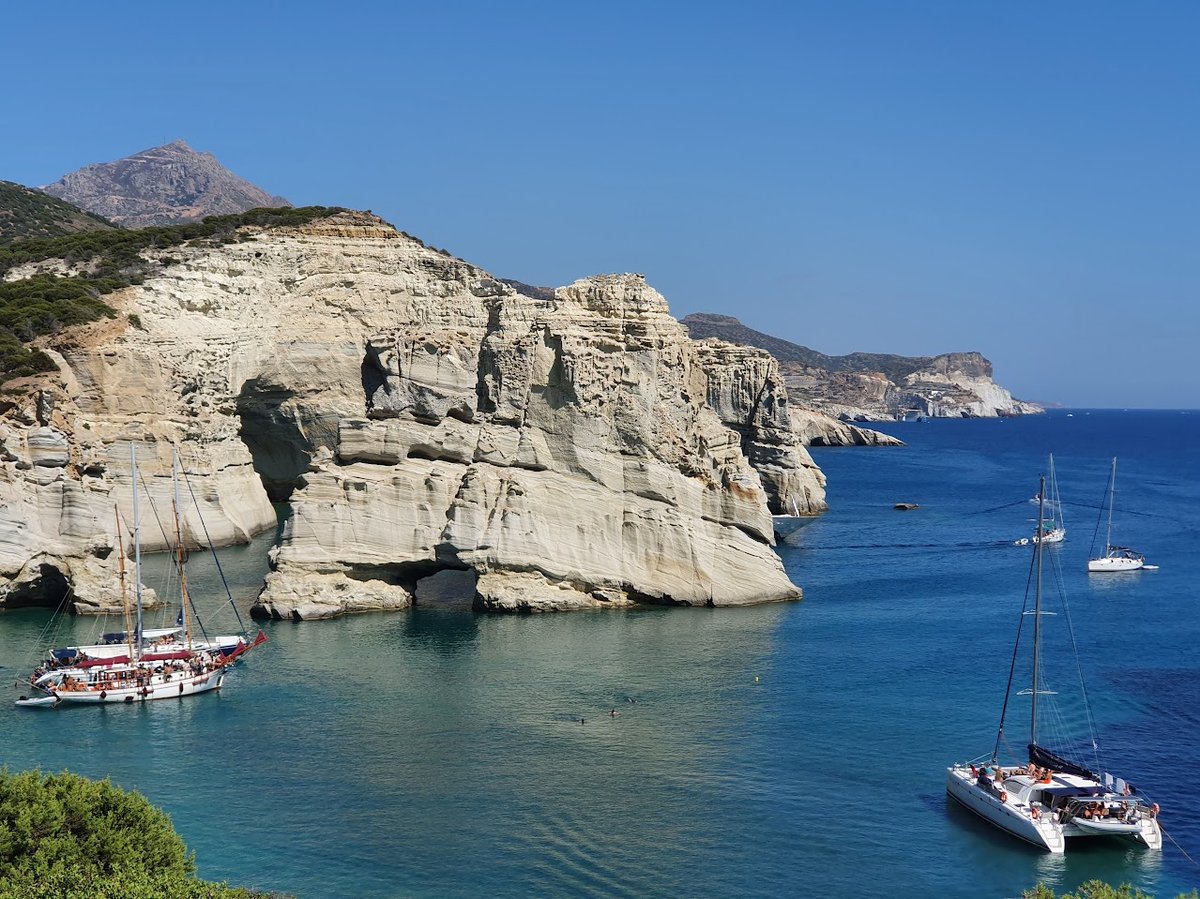
Kleftiko is accessible only by sea. The bay is ringed by tall white rock formations, sea caves, and clear water that shifts between turquoise and deep blue. Most visitors reach it on a boat tour departing from Adamas — these typically run four to six hours and include stops at several beaches along the southern coast.
Plaka Village
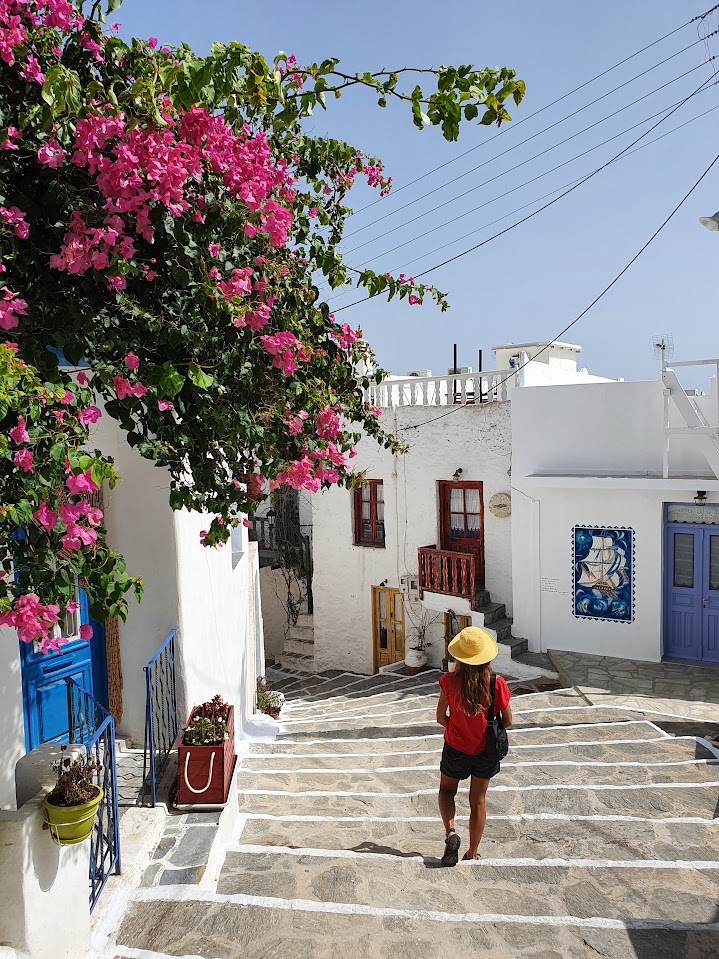
Plaka sits on a hill above Adamas and is the island’s capital. The streets are narrow, white-washed, and largely car-free. The Kastro at the top offers the best panoramic views on the island, including a sight-line directly to the sea in multiple directions. There is a small archaeological museum in the village worth half an hour, and several good tavernas that are less expensive than the tourist-facing spots in Adamas.
The Catacombs of Milos
The Milos catacombs are among the most significant early Christian burial sites in Greece, and one of the few in the Mediterranean outside Rome. Cut into the volcanic hillside near Tripiti, they contain around 8,000 burials in a network of passages dating from the 1st to the 5th century AD. Guided tours run regularly from the entrance — visits are not permitted independently. Allow around 45 minutes.
Klima Fishing Village
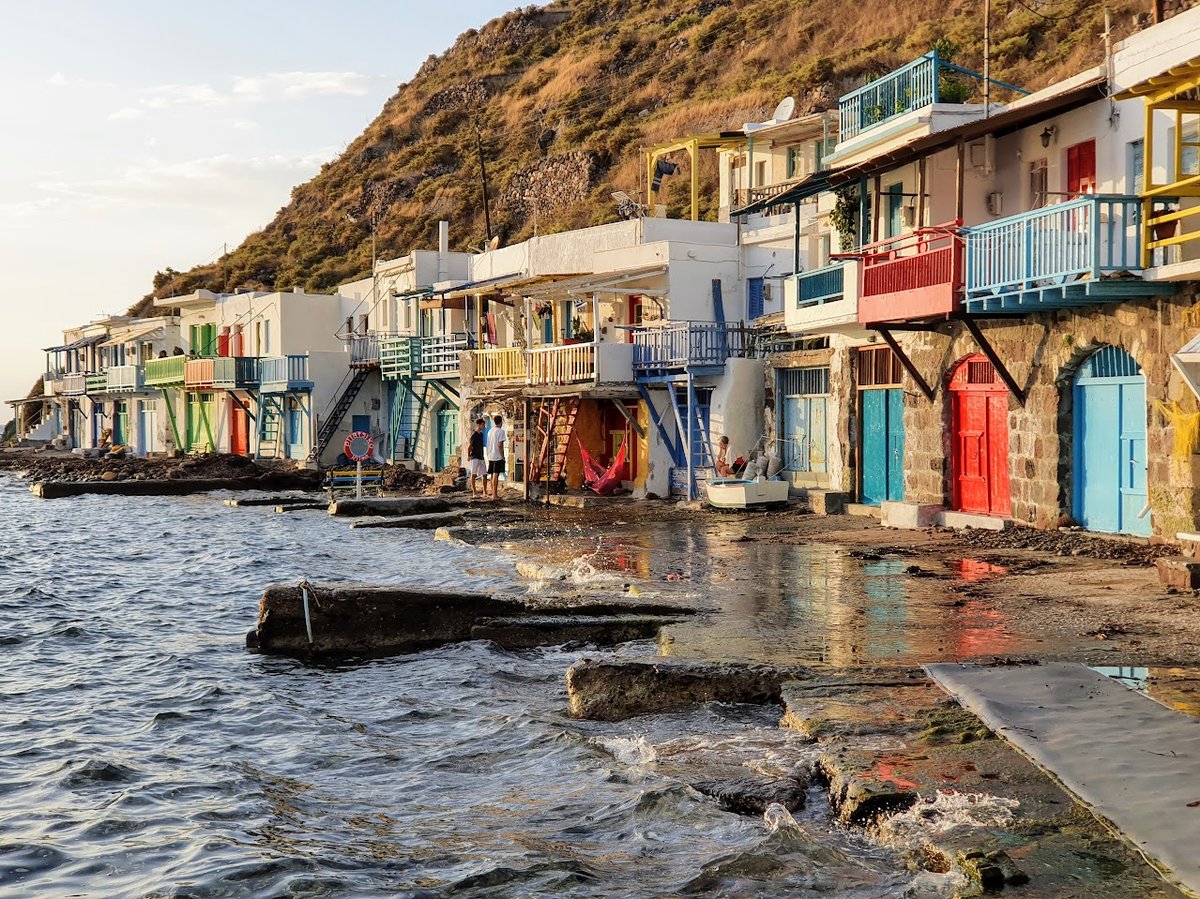
Klima is a small settlement of syrmata — traditional boathouses built directly into the rock at water level, with living quarters stacked above. The coloured doors open straight onto the sea. It is a short drive from Plaka and is more atmospheric than busy. There is little to do except walk the waterfront and take photographs, but that is largely the point.
Fyropotamos and the Northern Beaches
Fyropotamos is another syrmata village on the north coast, smaller and quieter than Klima, with a narrow beach and a handful of old boathouses. The northern coastline of Milos holds some of the island’s least visited beaches — Papafragas, with its sea cave and sheltered channel, and Firiplaka further south are both worth seeking out if you have your own transport.
Pollonia Village
Pollonia is a low-key fishing village on the northeastern tip of the island. It has a relaxed feel compared to Adamas, a decent beach, and several waterfront restaurants. It is also the departure point for the short ferry to Kimolos, a small neighbouring island that sees far fewer visitors and is worth a day trip if your schedule allows.
Boat Tours
A boat tour is the single most efficient way to see Milos’s coastline. Most tours leave from Adamas in the morning and return by late afternoon. A standard full-day tour covers Kleftiko, Sikia cave, Tsigrado, and Gerontas beach. Half-day options are available but cover fewer stops. Book in advance during July and August — tours fill quickly.
How To Get to Milos Island
There are two ways to reach Milos: by ferry or by plane.
Ferry to Milos
The main route runs from Piraeus (Athens) to Adamas, taking roughly 5 to 7 hours on a conventional ferry or around 4 hours on a high-speed service. Ferries run daily during the summer season and several times a week in the shoulder months. You can search routes and book tickets using Ferryscanner, which compares all operators on a given route. For more context on ferry travel generally, the Ferry Trips In Greece guide covers the practicalities.
Milos is also connected to other Cyclades islands. If you are island-hopping, routes to Sifnos, Serifos, Folegandros, and Santorini are all available in season. Connections to less obvious routes — such as those covered in the Ios To Kythnos Ferry Travel, Syros to Ios Ferry Guide, and Paros To Donoussa Ferry Guide — show how interconnected the Cyclades network is.
Flying to Milos
Milos has a small airport with domestic flights from Athens (around 45 minutes). Flights are limited in winter and book up fast in summer. Ferry remains the more flexible option for most travellers.
When To Visit Milos
The peak season runs from late June through August. The island is busy but fully operational — boat tours run daily, all businesses are open, and accommodation is at a premium. September and October are generally better: quieter, still warm, and with fewer crowds at popular spots like Sarakiniko. Milos also operates in winter at a reduced pace; for context on what to expect from Greek islands outside high season, the Greek Islands in Winter: Everything You Need To Know guide is worth reading before you book.
Getting Around Milos
A hire car or ATV is the most practical option for independent travel around the island. The road network covers most of the main sights, though some beaches require a short walk on unpaved tracks. Taxis are available from Adamas but limited. The island has a bus service connecting the main villages, but it does not reach many of the beaches.
Further Reading
If you are planning a broader Greek island trip, the Corfu Travel Guide covers a very different type of island in the Ionian. For ferry logistics in other parts of Greece, the Heraklion Ferry Port Guide, Heraklion to Piraeus Ferry, and Karpathos To Sitia Ferry pages cover Crete and the Dodecanese routes. If you are new to Greece and have basic questions — like What Is The Currency In Corfu? — those guides answer the fundamentals.
Frequently Asked Questions
What are the best things to do in Milos?
The top activities on Milos are visiting Sarakiniko beach, taking a boat tour to Kleftiko, walking Plaka village, and visiting the early Christian catacombs at Tripiti. If you have more time, Klima fishing village, Fyropotamos, and a day trip to Kimolos from Pollonia are all worthwhile.
How do you get to Milos island from Athens?
The most common route is by ferry from Piraeus port in Athens. Conventional ferries take around 5 to 7 hours; high-speed services take approximately 4 hours. Flights from Athens airport to Milos are available in around 45 minutes but are limited in frequency outside peak season.
Is Milos worth visiting?
Milos is consistently rated among the best Greek islands for beach variety, scenery, and relative accessibility. It has more than 70 beaches, a distinctive volcanic landscape unlike most other Cyclades islands, and a good range of activities. It is worth visiting if you want something more distinctive than the most heavily marketed islands.
When is the best time to visit Milos island?
September and October are the best months for most travellers — warm weather, functional services, and noticeably fewer crowds than July and August. If you visit in peak summer, expect busy beaches and higher prices. Winter visits are possible but boat tours and many businesses close from November through April.
How many days do you need in Milos?
Three full days is enough to cover the main sights at a reasonable pace: one day for a boat tour, one day for driving the island independently, and one day for Plaka, Klima, and the catacombs. Four or five days gives more flexibility for repeat beach visits and a day trip to Kimolos.
What is Milos known for?
Milos is best known for Sarakiniko beach and its white volcanic rock formations, Kleftiko bay, and the Venus de Milo statue — discovered on the island in 1820 and now held in the Louvre. The island is also noted for having more beaches per square kilometre than almost any other island in Greece.