Useful Resources for Your Greek Island Trip
- Find accommodation in Greece – hotels, apartments and villas on Booking.com
- Book tours and activities in Greece via Viator
- Find guided experiences and day trips via GetYourGuide
- Compare car hire prices in Greece via DiscoverCars
Greek ferries are the backbone of island travel in Greece, connecting over 100 inhabited islands across multiple seas — and knowing how they work will save you time, money, and a few missed departures.
Whether you’re planning a straightforward hop from Athens to Santorini or building a multi-island itinerary through the Cyclades, Dodecanese, or Ionian islands, this guide covers what you need to know about ferry trips in Greece: routes, schedules, booking, ports, and the practical details that most travel articles skip.
How Greek Ferries Work
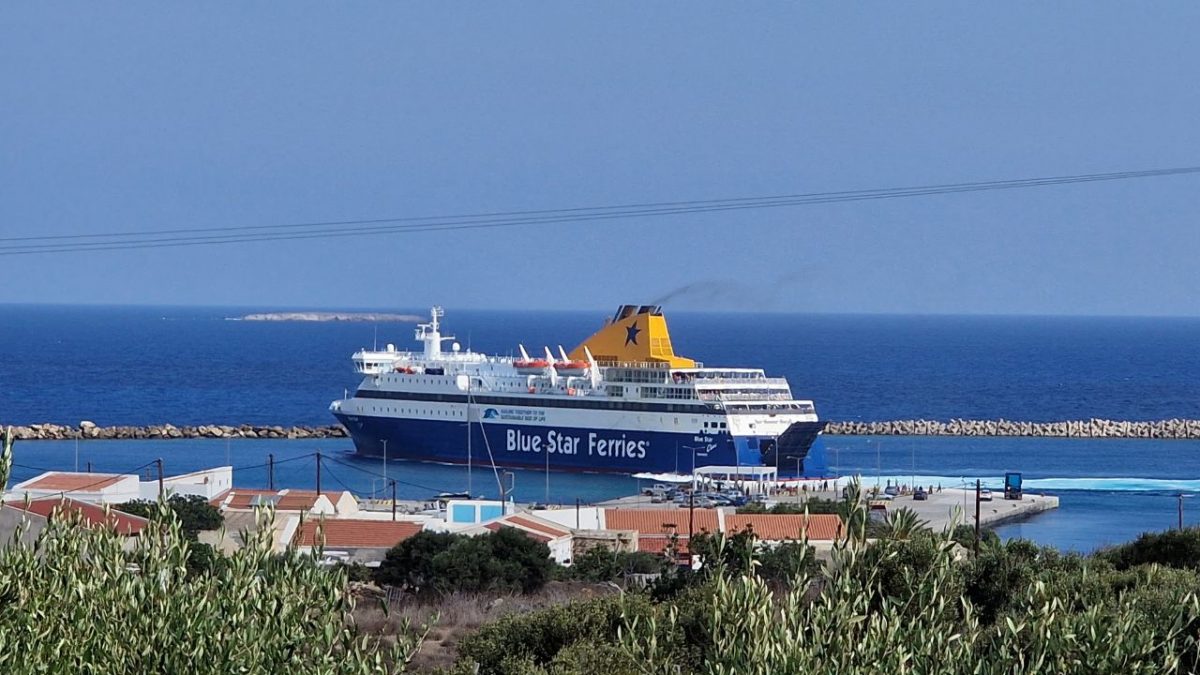
Greece has one of the largest ferry networks in Europe. The system is run by a mix of private operators — including Blue Star Ferries, Seajets, Minoan Lines, Anek Lines, and Golden Star Ferries — each serving different routes on different schedules. There is no single state-run network; instead, routes are awarded under a public service obligation system that ensures even small, remote islands receive a minimum level of service.
Ferries in Greece fall into two broad categories:
- Conventional (large) ferries: Slower, larger vessels that carry vehicles, trucks, and passengers. These typically run overnight on longer routes and offer cabins, lounges, and on-board restaurants.
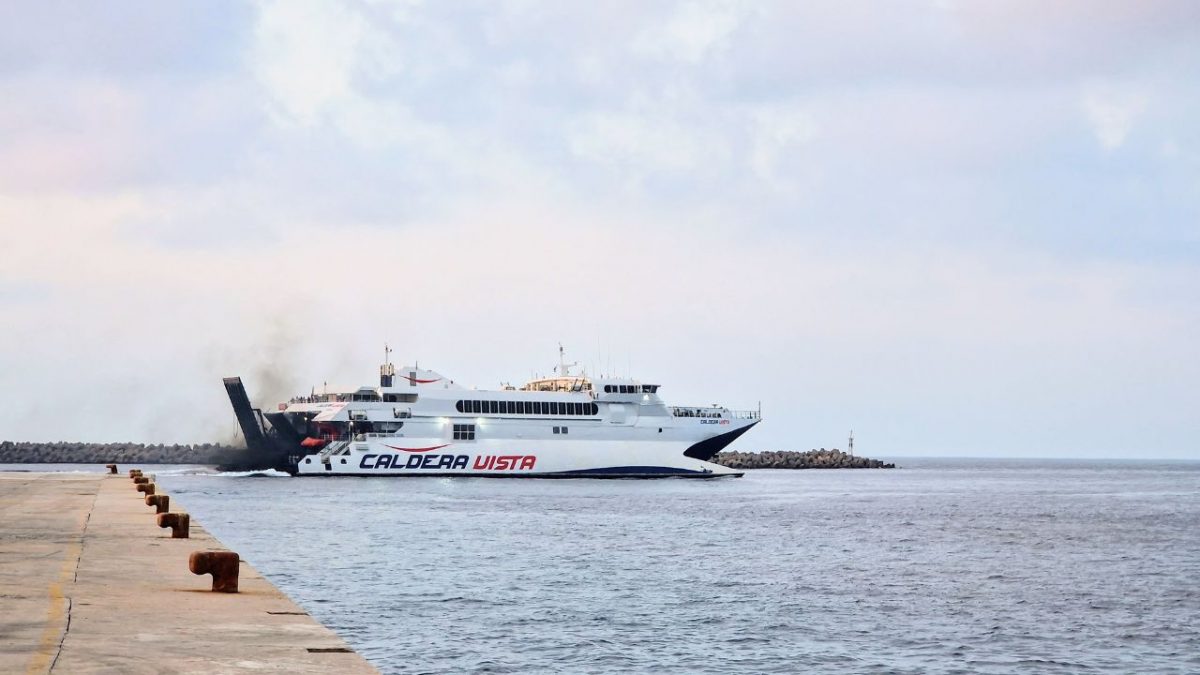
- High-speed ferries and catamarans: Faster, more expensive, passenger-only or limited-vehicle vessels. Seajets and Hellenic Seaways operate many of these. They’re weather-sensitive and can cancel in rough seas.
Greek ferry schedules are seasonal. The full network runs from late April through October. Outside peak season, many routes are reduced to 2-3 sailings per week, and some island connections disappear entirely from November to March. Always check current schedules rather than assuming last year’s timetables still apply.
Ferryscanner is one of the most reliable tools for checking current Greek ferry schedules and booking tickets in one place. It aggregates routes across all major operators.
Main Ferry Ports in Greece
Most ferry routes originate from a small number of major hub ports on the mainland and larger islands. Understanding which port serves which routes will prevent a lot of confusion when planning.
Piraeus (Athens)
Piraeus is the busiest ferry port in Europe and the main departure point for most Greek island routes. It serves the Cyclades, Dodecanese, Crete, and the eastern Aegean. The port has multiple gates — check your ticket carefully, as departing from the wrong gate can mean a long walk with luggage.
Rafina (Athens area)
Rafina is the second Athens-area port, located about 30km east of the city centre. It’s the main alternative for ferries to the northern Cyclades (Mykonos, Andros, Tinos, Syros) and is often faster and less crowded than Piraeus. Travellers staying in central Athens need to factor in the transfer time.
Heraklion (Crete)
Crete’s main port handles routes to Piraeus as well as connections within the Aegean. The Heraklion Ferry Port Guide has full details on facilities and connections. The Heraklion to Piraeus ferry is one of the most-used overnight routes in Greece.
Corfu (Ionian Islands)
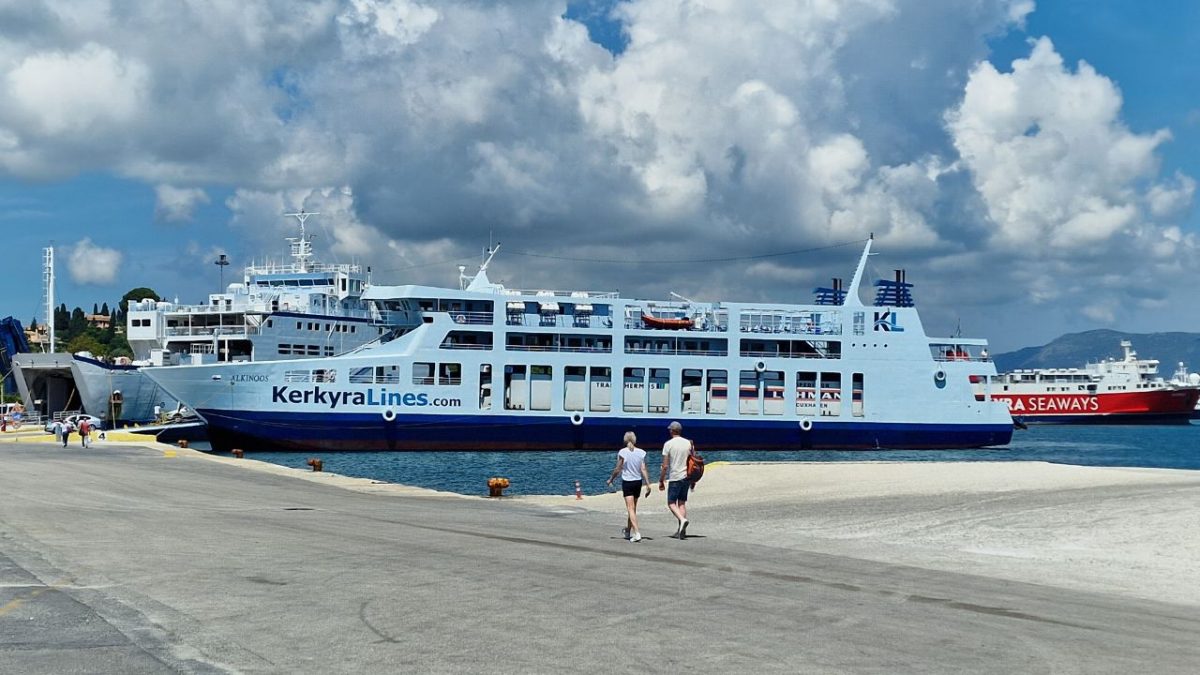
Corfu Town’s ferry port handles international connections to Italy (via Brindisi and Bari) as well as domestic routes. If you’re travelling the Ionian islands, Corfu is the main entry point. See the Corfu Travel Guide for more context. One question that often comes up: what currency is used in Corfu — the answer is euros, same as the rest of Greece.
Popular Greek Ferry Routes
Greek island ferry routes are concentrated into a few main island groups. Routes within each group are frequent; routes that cross between groups (e.g., Cyclades to Dodecanese) are far less common and usually require going back through a hub port.
Cyclades Routes
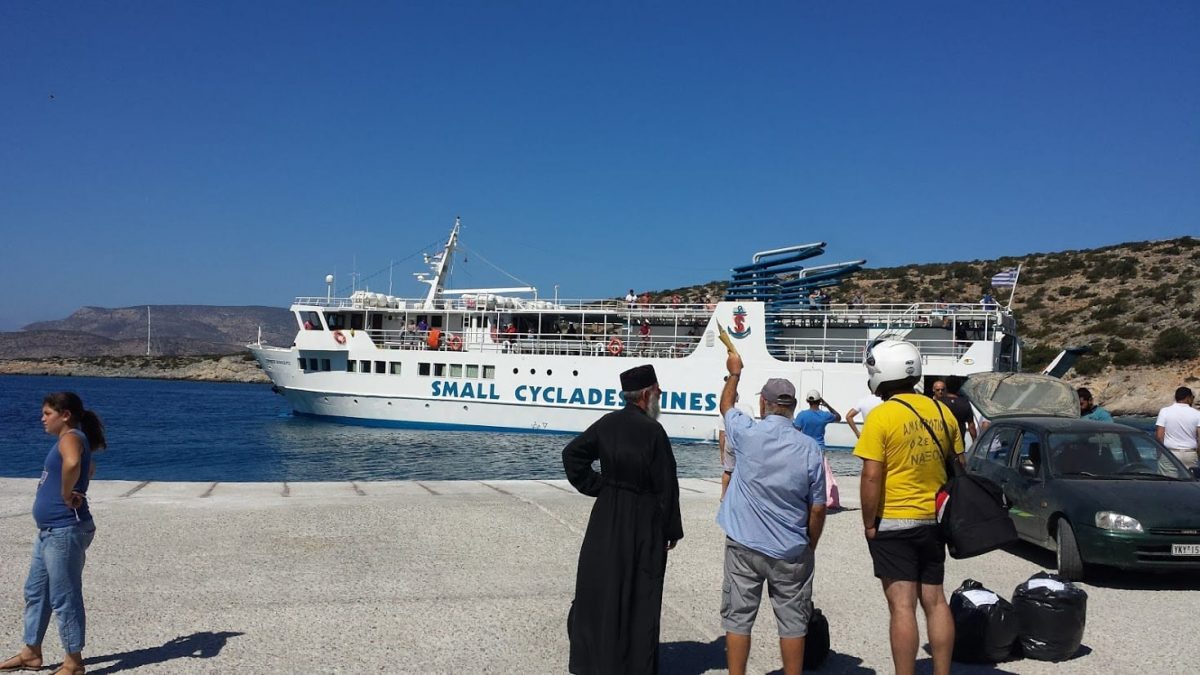
The Cyclades are the most ferry-connected island group in Greece. Mykonos, Santorini, Paros, Naxos, Ios, and Syros all have multiple daily departures in peak season from Piraeus and Rafina. Smaller Cyclades islands — including the Little Cyclades — are served by smaller vessels from Naxos or Paros.
Some useful specific routes:
Sporades Routes
The Sporades — Skiathos, Skopelos, and Alonissos — are served mainly from Volos and Agios Konstantinos on the mainland. These are compact routes; the crossing from Volos to Skiathos takes around 90 minutes on a fast ferry. Skopelos has two ports: Skopelos Town and the Glossa ports in the north — ferries typically stop at both.
Dodecanese Routes
The Dodecanese run in a long chain from Rhodes in the south to Patmos in the north. Piraeus is the main departure point for overnight trips; daytime connections between islands are served by smaller local ferries. Routes in the southern Dodecanese include:
- Karpathos to Sitia ferry (connecting to Crete)
Crete Routes
Crete is large enough to warrant its own internal ferry considerations. Connections from Crete to the Cyclades include:
Travellers spending time on Crete often ask about currency too: what is the currency in Crete — it’s euros, same as everywhere in Greece.
Greek Ferry Schedules and Timetables
Greek ferry timetables change between seasons and are sometimes updated mid-season by operators. There is no single authoritative source — each operator publishes its own schedule, and aggregators like Ferryscanner pull from most of them.
Key things to know about Greek ferry schedules:
- Many overnight ferries depart late evening (22:00–24:00) and arrive early morning. This is standard on long routes like Piraeus–Heraklion or Piraeus–Rhodes.
- Day ferries run on shorter routes. The Piraeus–Mykonos crossing takes 4–5 hours on a conventional ferry, 2.5 hours on a high-speed.
- Schedules for remote or small islands (like Schinoussa) may only show 2–3 weekly departures even in summer.
- Always confirm the departure port and gate number when you receive your ticket. Piraeus has 10+ gates spread over several kilometres.
Booking Greek Ferry Tickets
Booking in advance is strongly recommended for travel between July and late August, particularly on popular routes (Piraeus to Santorini, Piraeus to Mykonos) and for cabin berths on overnight ferries. Deck-class tickets are less likely to sell out, but the better cabins go early.
Options for booking:
- Online aggregators: Ferryscanner lets you search and compare routes across multiple operators from one interface.
- Direct from operators: Blue Star Ferries, Seajets, and others sell directly through their own websites. Useful if you know which operator you want.
- At the port: Ticket booths at Piraeus and other major ports sell walk-up tickets. Fine in low season; risky in peak summer for popular routes.
For accommodation at each island, Booking.com has the widest inventory for Greece and is generally the most reliable way to compare options.
If you prefer an organised day trip that includes ferry travel rather than managing tickets yourself, Viator offers day cruises from Athens to islands including Hydra, Poros, and Aegina — these are useful for first-time visitors who want a managed introduction to Greek island travel.
What to Know Before You Go
A few practical points that will make your ferry trips smoother:
Arrive Early
Greek ferries board passengers 30–60 minutes before departure. For large conventional ferries, boarding can take a while as vehicles are loaded first. Aim to be at the port at least 45 minutes before departure. Missing a ferry because of a taxi delay or wrong gate is more common than it should be.
Luggage and Vehicles
On large conventional ferries, luggage is typically stored in designated areas on the car deck or in corridors — it’s not kept with you in a cabin or seat. Keep valuables and anything you’ll need for the journey in a small bag. If you’re bringing a vehicle, check the operator’s rates and book the vehicle slot along with your passenger ticket.
Cancellations and Weather
High-speed ferries cancel more frequently than conventional ferries in bad weather. The Aegean can be rough, particularly during the meltemi winds in July and August. If you have a tight connection or a flight to catch, build buffer time into your itinerary. Conventional ferries operate in rougher conditions but can also be delayed.
Ticket Classes
On large overnight ferries, ticket classes typically include:
- Deck class / economy seat: Cheapest option. Access to seating areas and deck but no berth.
- Cabin berths: 2-, 3-, or 4-berth cabins, some with private bathrooms. Essential for overnight comfort on long routes.
- Cabin grades: Ranges from economy to business class. Higher grades include air conditioning, private bathrooms, and better furnishings.
Multi-Island Itineraries by Ferry
One of the most common uses of Greek ferries is building a multi-island itinerary. A few principles that hold across all island groups:
- Stick to one island group per trip where possible. Crossing between groups (e.g., Cyclades to Dodecanese) usually means routing back through Piraeus, adding a day to your travel.
- Plan island order around the ferry route, not just geography. Some islands that look close on a map have no direct connection.
- Leave one buffer day per week of travel for weather delays, particularly on fast-ferry routes.
A typical 10-day Cyclades itinerary might run: Athens (Piraeus) — Paros — Naxos — Santorini — back to Athens. All legs have multiple daily departures in summer and can be booked as separate tickets.
For Sporades itineraries, the natural sequence follows the ferry route: Skiathos — Skopelos Town — Glossa — Alonissos, then back. Direct connections between non-adjacent Sporades islands are rare; the ferry generally calls at each island in sequence.
Frequently Asked Questions
What is the best way to check Greek ferry schedules?
Use an aggregator like Ferryscanner to search across operators in one place. Greek ferry timetables change seasonally, so always check current schedules rather than relying on information from previous years. Operator websites also publish their own timetables, but you’d need to check each one separately.
How far in advance should I book Greek ferry tickets?
For peak summer travel (July–August), book popular routes 4–6 weeks in advance, especially if you want a cabin berth on an overnight ferry or are travelling with a vehicle. Off-peak (May, June, September, October), a week in advance is usually sufficient. Avoid walk-up booking in August on any route to or from Santorini or Mykonos.
Are there direct ferry routes between all Greek islands?
No. Greek ferry routes are not a comprehensive grid. Direct connections exist mainly within island groups. If you want to travel between groups — for example, from the Cyclades to the Ionian islands — you will almost certainly need to route through Athens. Always search your specific route rather than assuming a direct connection exists.
What is the difference between a high-speed ferry and a conventional ferry in Greece?
Conventional ferries are large, vehicle-carrying vessels that travel at 15–20 knots. They’re slower but more stable in rough seas, generally cheaper, and are the only option for travelling with a vehicle. High-speed ferries (catamarans and hydrofoils) travel at 30–40 knots, cost more, and are more likely to cancel in bad weather. For passengers without vehicles, high-speed ferries are a good option on shorter routes in calm conditions.
Which Greek ferry routes are most popular?
The busiest routes are Piraeus to Mykonos, Piraeus to Santorini, Piraeus to Heraklion (Crete), and Piraeus to Rhodes. Within the Cyclades, the Paros–Naxos–Ios–Santorini chain is heavily used. In the Sporades, the Volos–Skiathos–Skopelos–Alonissos route is the main connection.
Can I travel between Greek islands without going through Athens?
Within the same island group, yes — you can island-hop within the Cyclades, Dodecanese, or Sporades without returning to Athens. Between groups, it is much harder. A direct connection like Heraklion to Piraeus or Crete to the Cyclades exists on some routes, but these are seasonal and infrequent. For most inter-group travel, Piraeus or another mainland port is the practical transit point.