Useful Resources for Your Greek Island Trip
- Find accommodation in Greece – hotels, apartments and villas on Booking.com
- Book tours and activities in Greece via Viator
- Find guided experiences and day trips via GetYourGuide
- Compare car hire prices in Greece via DiscoverCars
The Dodecanese islands are a group of 12 main islands and dozens of smaller islets in the southeastern Aegean Sea, sitting close to the Turkish coast and stretching from Samos in the north to Kasos near Crete in the south.
The name comes from the Greek word for twelve (dodeka), though the island group actually contains far more than 12 inhabited islands. The Dodecanese form one of the most distinct and historically layered regions in Greece, shaped by Ottoman rule, Italian occupation, and a late union with Greece in 1947 — long after most of the Greek islands. That history is visible in the architecture, the street plans, and the food.
For travellers, the Dodecanese offer a wide range of experiences: from the heavily visited medieval city of Rhodes to quiet, car-free islands that see only a fraction of tourist traffic. This guide covers the geography, the main islands, ferry connections, and what to expect when planning a Dodecanese trip.
Where Are the Dodecanese Islands?
The Dodecanese lie in the southeastern Aegean, bordering the Turkish coast. Rhodes is the southernmost major island and the regional capital. Moving north, the chain includes Kos, Kalymnos, Leros, Patmos, and several smaller islands. To the south, Karpathos and Kasos island is positioned between Karpathos and Crete, forming the tail end of the island group.
Because of their position close to Turkey, the Dodecanese were among the last Greek territories to be incorporated into the modern Greek state. They were under Italian administration from 1912 until 1943, and formally joined Greece in 1947. This relatively recent union with Greece explains why architecture in towns like Rhodes Old Town and Kos Town looks markedly different from the whitewashed Cycladic style most people associate with Greek islands.
The Main Dodecanese Islands
Rhodes
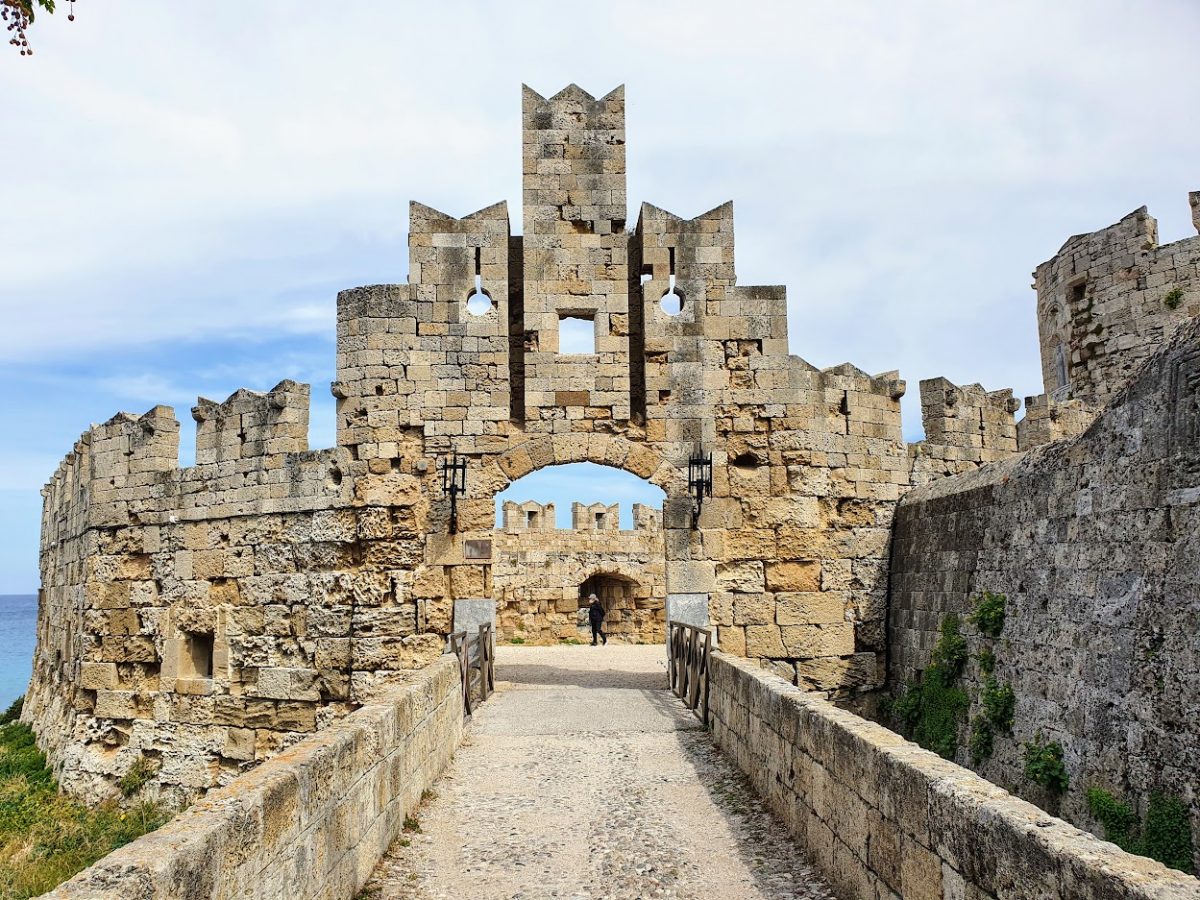
Rhodes is the largest island in the Dodecanese and the most visited. The medieval Old Town — a UNESCO World Heritage Site — is one of the best-preserved medieval cities in Europe, surrounded by intact city walls built by the Knights of St John. The Palace of the Grand Master, the Street of the Knights, and the old harbour are the main draws within the walls.
Beyond the Old Town, Rhodes has a well-developed tourist infrastructure with beach resorts, restaurants, and good transport links to smaller nearby islands including Symi.
Kos
Kos is the second largest island in the Dodecanese and one of Greece’s most popular summer destinations. It is known for the Asklepion — an ancient healing sanctuary dedicated to the god of medicine — and for its long sandy beaches. The island is flat and easy to navigate by bicycle, which sets it apart from the mountainous terrain common elsewhere in the group. Like Rhodes, Kos shows strong Italian architectural influence in its town centre.
Symi
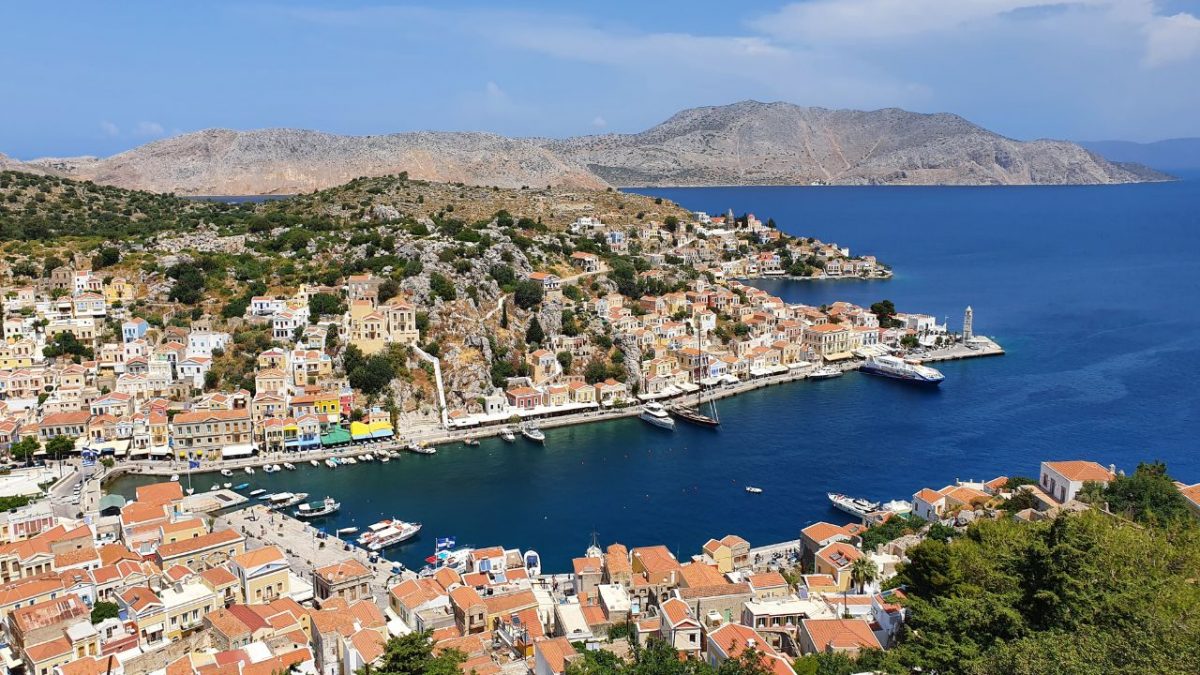
Symi is small and steep, with a harbour town — Gialos — that is considered one of the most photogenic in the Aegean. Neoclassical mansions in ochre, terracotta, and yellow line the hillside above the port. The island has no airport and limited flat ground, which keeps visitor numbers lower than Rhodes despite being just an hour away by fast ferry. Day trips from Rhodes to Symi are common, but staying overnight gives access to quieter beaches and the monastery of Archangel Michael Panormitis at the southern end of the island.
Patmos
Patmos is a small island at the northern end of the Dodecanese, best known as the place where Saint John is said to have written the Book of Revelation. The Cave of the Apocalypse and the Monastery of Saint John the Theologian are major pilgrimage sites and both are UNESCO listed. Despite the religious significance, Patmos also attracts visitors looking for quiet beaches and an upmarket, low-key atmosphere. There are no large hotels or mass-market resorts.
Kalymnos
Kalymnos built its identity around the sponge-diving industry, which peaked in the 19th and early 20th centuries. Today the island is better known internationally as a rock climbing destination — the limestone cliffs around Massouri draw climbers from across Europe. The port town of Pothia is the largest settlement in the Dodecanese after Rhodes and Kos towns, with a busy commercial waterfront and good ferry connections.
Leros
Leros is among the least-visited of the main Dodecanese islands. The Italian architectural legacy is particularly prominent here — Lakki, the main port, was designed as a model fascist town in the 1930s and remains one of the more unusual townscapes in Greece. The island has good beaches and a relaxed pace, and ferry connections to both Athens and Rhodes make it accessible for those willing to step off the standard tourist circuit.
Kasos
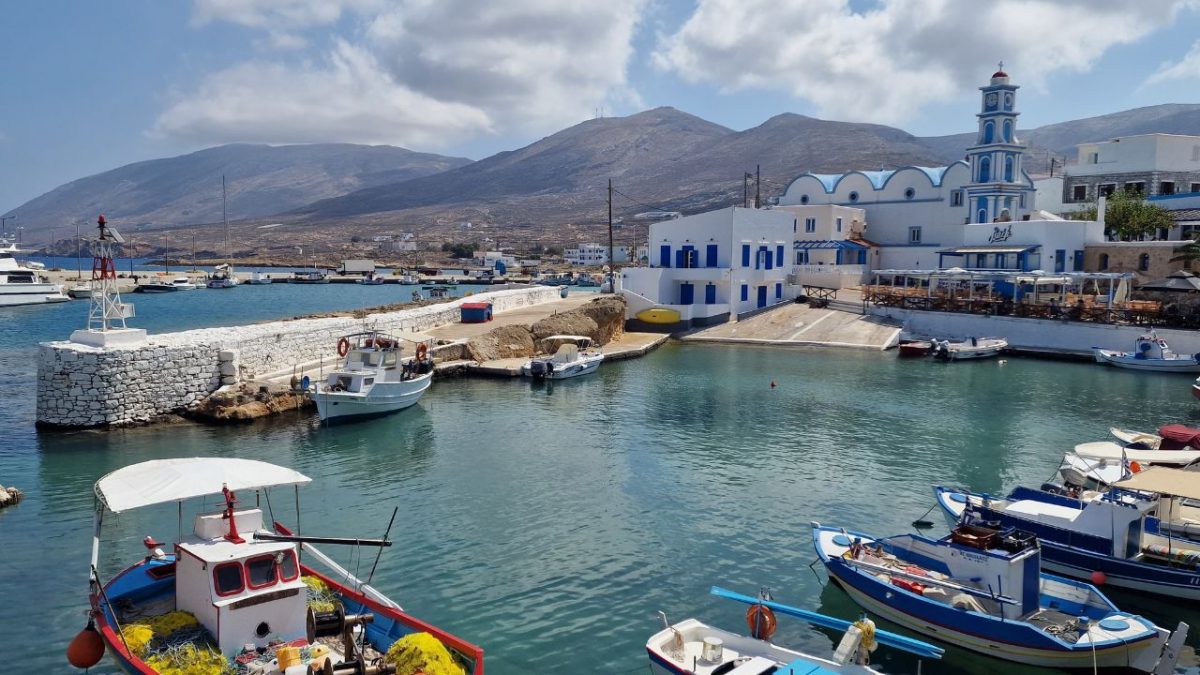
Kasos is the smallest and most remote of the Dodecanese, lying at the southernmost point of the island group. It sees very few foreign tourists and has minimal tourist infrastructure, which is precisely its appeal for travellers looking for an authentic, unhurried Greek island. The port town of Fry is the centre of island life, with a small harbour, tavernas, and a sense of timelessness that is hard to find on better-known islands.
Karpathos
Karpathos is the second largest island in the Dodecanese and one of the more overlooked. It lies between Rhodes and Crete and has a dramatic mountainous interior, good beaches on the west coast, and the traditional village of Olympos in the north — where some residents still wear local costume and speak a dialect with archaic Greek features. The northern part of the island is only accessible by boat or a rough road.
Island Hopping in the Dodecanese
Dodecanese island hopping is practical and well-served by ferry routes. The main ferry route runs from Piraeus (Athens) southward through the islands, calling at Patmos, Leros, Kalymnos, Kos, and Rhodes, with some services continuing to Karpathos and Kasos. Local ferries and high-speed catamarans connect the smaller islands within the group.
Rhodes serves as the main hub for island hopping in the southern Dodecanese. From Rhodes, ferries run regularly to Symi, Tilos, Nisyros, Kos, and Kalymnos. For the northern Dodecanese, Kos and Kalymnos are good bases.
To search and book ferries across the Dodecanese, Ferryscanner covers routes across all the islands and lets you compare operators and journey times in one place. For the southern end of the chain, see the dedicated guide on how to get from Piraeus to Kasos.
A typical Dodecanese island hopping itinerary for two weeks might look like this:
- Arrive Rhodes — 3 nights (Old Town, Lindos, day trip to Symi)
- Symi — 2 nights
- Kos — 2 nights
- Kalymnos — 2 nights
- Patmos — 2 nights
- Return to Athens by ferry or fly from Kos or Rhodes
This is a manageable pace that avoids the exhaustion of moving every day while still covering a cross-section of the group’s character — from the tourist infrastructure of Rhodes and Kos to the quieter rhythms of Symi and Patmos.
Best Islands in the Dodecanese by Travel Type
Best for History and Culture
Rhodes Old Town is the obvious answer — the medieval walls, the Knights’ Quarter, and the Archaeological Museum make it one of the most historically dense destinations in Greece. Patmos is the choice for religious history. Leros and Kos both have significant Italian-era architecture for those interested in 20th-century history.
Best for Beaches
Kos has the most consistent stretch of sandy beach. Karpathos has some outstanding west-coast beaches that are less crowded than anything on Kos or Rhodes. Tilos and Nisyros are smaller islands with good beaches and far fewer visitors.
Best for Authentic Greek Island Life
Kasos, Leros, and Tilos see very little mass tourism. These are places where island life continues without being shaped by visitor expectations — local kafeneions, quiet harbours, and a slower pace that has largely disappeared from the more visited islands.
Best for Outdoor Activities
Kalymnos is the climbing destination. Kos is flat and good for cycling. Karpathos offers strong winds on the east coast that attract windsurfers and kitesurfers, particularly at the beach of Afiartis.
Getting to the Dodecanese
Rhodes and Kos both have international airports with direct flights from much of Europe during the summer season (roughly April to October). Kalymnos, Leros, Karpathos, and Kasos have smaller airports with domestic connections via Athens.
The ferry route from Piraeus takes around 16-18 hours to Rhodes on overnight services. High-speed ferries are available on some routes but cover shorter legs — Athens to Rhodes in a single fast-ferry journey is not practical. The most common approach is to fly into Rhodes or Kos and use local ferries to reach smaller islands.
When to Visit the Dodecanese
The peak season runs from July through August when temperatures are highest, accommodation prices peak, and ferry services are at maximum frequency. June and September offer a better balance: warm enough for beaches, fewer crowds, and more reasonable prices.
May is good for walkers and those interested in history — the weather is mild, flowers are out, and the main sites are uncrowded. October is viable for the southern Dodecanese (Rhodes, Kos) and the sea is still warm enough to swim.
The northern Dodecanese — Patmos, Leros, Kalymnos — shut down significantly between November and March. The southern islands have year-round residents but limited tourist services outside the main season.
FAQ: Dodecanese Islands Greece
How many islands are in the Dodecanese?
The Dodecanese officially consists of 12 main islands (dodeka means twelve in Greek), but the island group includes over 150 smaller islands and islets in total. Of the named islands, around 26 are inhabited. The main inhabited islands include Rhodes, Kos, Kalymnos, Leros, Patmos, Symi, Tilos, Nisyros, Karpathos, Kasos, Astypalaia, and Halki.
What is the best Dodecanese island to visit?
It depends on what you are looking for. Rhodes is the best all-round destination with the most to see and the best transport links. Kos suits travellers who want good beaches and easy access. Symi is the best choice for scenery and a more refined atmosphere. Patmos is the best island for a quiet, contemplative stay with historical depth. For an off-the-beaten-track experience, Kasos or Leros are hard to beat.
How do I get between the Dodecanese islands by ferry?
Ferries connect the main islands on a regular basis throughout the summer season. Rhodes is the main hub for the southern Dodecanese, while Kos and Kalymnos serve the central and northern islands. You can compare routes and book tickets using Ferryscanner. Journey times vary significantly — Rhodes to Symi takes around one hour on a fast ferry, while Rhodes to Patmos takes five to six hours on a conventional ferry.
Are the Dodecanese islands good for island hopping?
Yes. The Dodecanese are one of the better island groups for hopping because the ferry network is reasonably well developed and several islands are close together. Rhodes–Symi, Kos–Kalymnos, and Kalymnos–Leros are short hops that work well as part of a longer itinerary. The main limitation is that some of the smaller islands have limited or seasonal ferry services, so checking schedules in advance is important.
What is the Dodecanese known for?
The Dodecanese are known for a combination of things: the medieval city of Rhodes, the ancient ruins at Kos (including the Asklepion), the distinctive neoclassical harbour of Symi, the religious significance of Patmos, and the Italian architectural legacy visible across several islands. The group is also known for its proximity to Turkey — the Turkish coast is visible from Rhodes and Kos on clear days.
Is Dodecanese island hopping suitable for budget travellers?
The Dodecanese can be done on a budget, though it is not the cheapest island group in Greece. Ferry tickets add up over a multi-island itinerary, and accommodation in Rhodes and Kos during peak season is expensive. Travelling in shoulder season (May, June, September) reduces costs significantly. Smaller islands like Leros, Kasos, and Tilos are cheaper across the board — accommodation, food, and activities cost noticeably less than on the main tourist islands.