Useful Resources for Your Greek Island Trip
- Find accommodation in Greece – hotels, apartments and villas on Booking.com
- Book tours and activities in Greece via Viator
- Find guided experiences and day trips via GetYourGuide
- Compare car hire prices in Greece via DiscoverCars
The Cyclades are a group of around 220 islands scattered across the central Aegean Sea, forming one of Greece’s most visited and visually distinctive island groups.
Most people recognise the Cyclades instantly: whitewashed cubic houses, deep-blue church domes, narrow marble-paved lanes, and sea views in every direction. But the Cyclades archipelago is far more varied than the postcard version suggests. Some islands are party destinations, others are quiet farming communities, and a handful contain ancient ruins that predate classical Greece by thousands of years. This guide covers what you need to know about the Cyclades Greek islands — geography, the main islands, how to get there, and how to plan a Cyclades island hopping trip.
What Are the Cyclades Islands?
The Cyclades take their name from the Greek word kyklos (circle), because the islands were historically described as forming a rough ring around the sacred island of Delos. In administrative terms, the Cyclades form a single regional unit of Greece, covering approximately 2,572 square kilometres of land spread across a much larger area of open sea.
Of the 220 or so islands in the Cyclades archipelago, around 24 are inhabited. The rest are uninhabited islets, some visited only by goats and the occasional day-trip boat. The inhabited islands range in size from Naxos — the largest, at around 430 square kilometres — down to tiny Donoussa or Schinoussa, which have permanent populations of only a few hundred people.
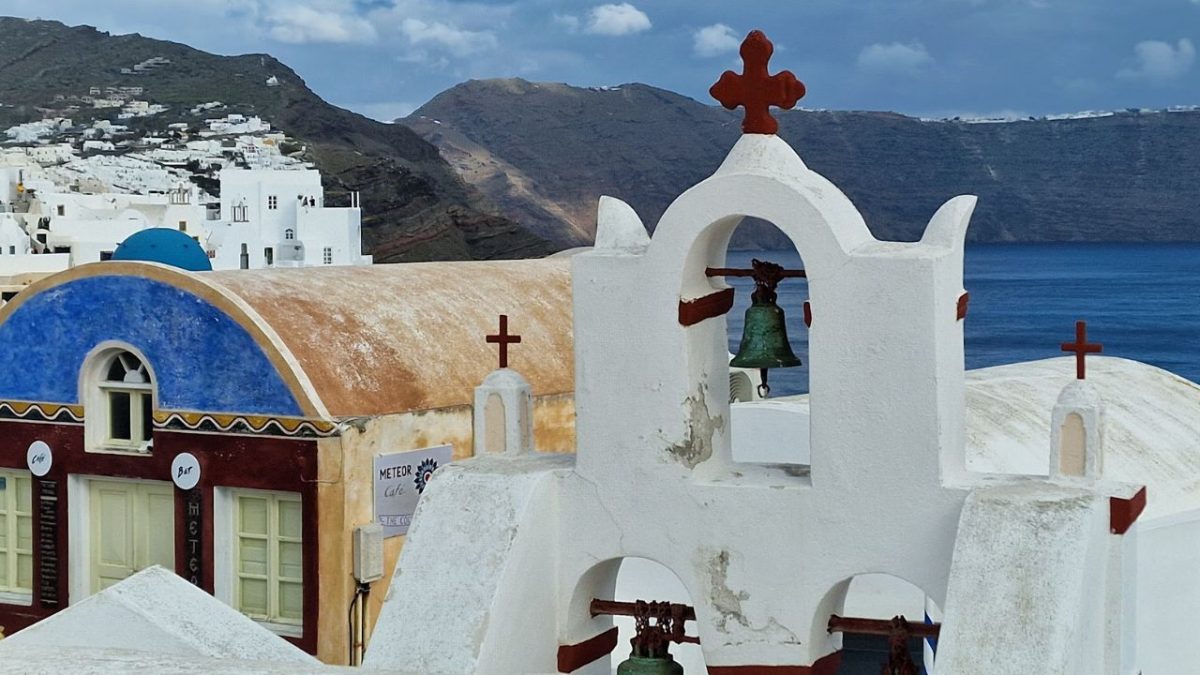
The Cycladic islands share a recognisable architectural style — the whitewash-and-blue that defines so much of Greek island imagery — but each island developed its own distinct character depending on its history, geography, and economy. Mykonos became a cosmopolitan hub; Paros developed around marble quarrying and is now a popular mid-range destination; Sifnos built a reputation for its pottery and food; Folegandros and Amorgos attract travellers looking for something quieter.
How Many Cyclades Islands Are There?
The exact count depends on what you include. The Cyclades officially comprise 220 islands, islets, and rocky outcrops. Of those, 24 are permanently inhabited. The most frequently visited inhabited islands number around 15 to 20, depending on the season.
The main inhabited Cyclades islands are: Amorgos, Anafi, Andros, Antiparos, Delos (day visits only — no overnight stays permitted), Donoussa, Folegandros, Iraklia, Ios, Kea, Kythnos, Milos, Mykonos, Naxos, Paros, Santorini (Thira), Schinoussa, Serifos, Sifnos, Sikinos, Syros, Tinos, and Thirasia.
The Main Cyclades Islands
Santorini
Santorini is a must-visit destination for many travellers to Greece, and it consistently ranks among the most photographed places in the world. The island sits on the rim of a submerged caldera — the remains of a volcanic eruption around 3,600 years ago that may have contributed to the collapse of Minoan civilisation. The cliff-top villages of Fira and Oia look directly across the caldera to the volcanic islands at its centre.
Santorini’s beaches are unusual: many are dark grey or reddish-black due to the volcanic rock, rather than the pale sand found elsewhere in the Aegean. The island also produces a distinctive dry white wine from Assyrtiko grapes grown in low-lying basket formations that protect them from the strong Aegean winds.
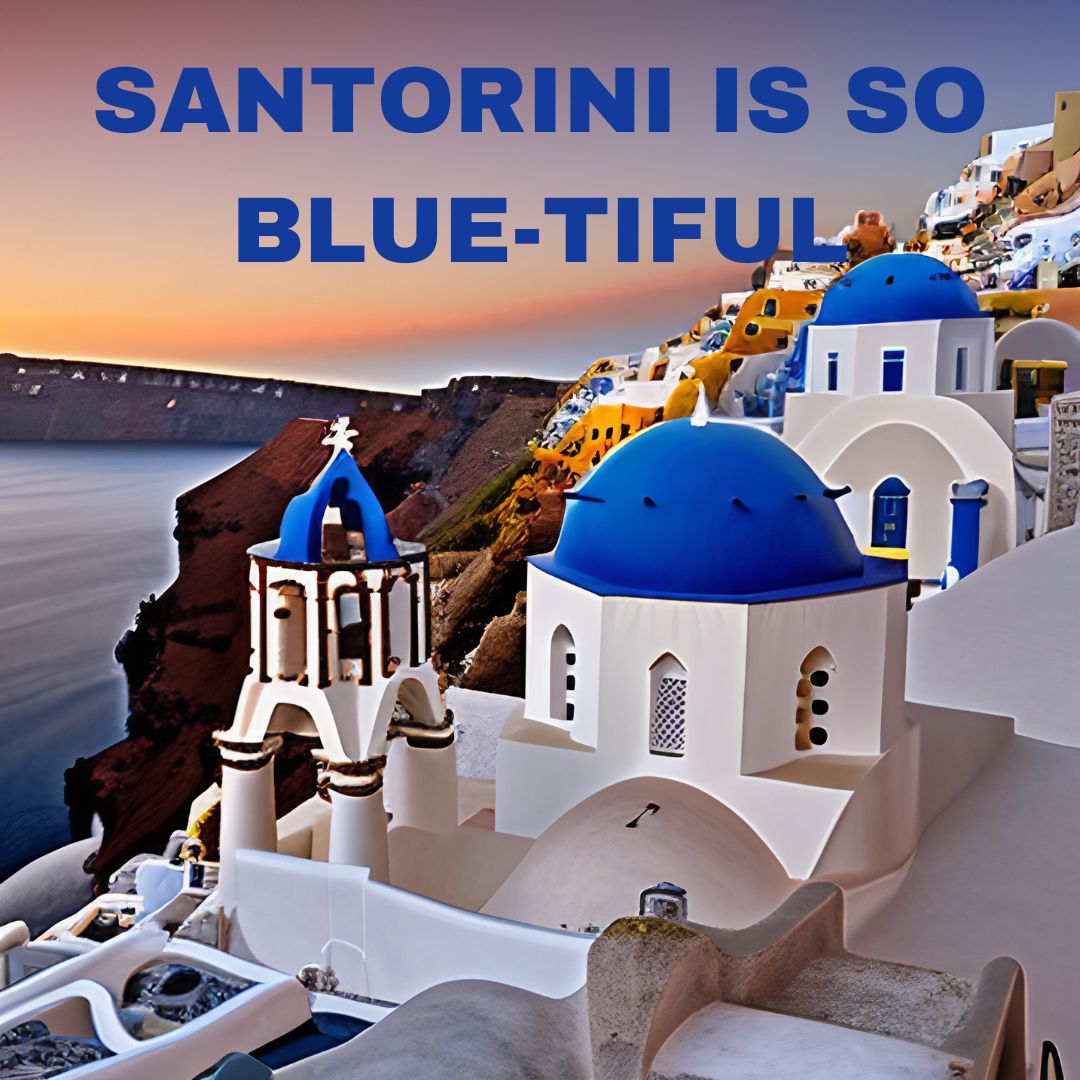
If you’re looking for Santorini Instagram Captions for your trip photos, that resource covers the best lines for the iconic settings around the island.
Mykonos
Mykonos has been an international party destination since the 1970s and has never looked back. The island attracts a mix of clubbers, luxury travellers, and LGBTQ+ visitors, drawn by its nightlife, beach clubs, and high-end restaurants. Mykonos Town (Chora) is a warren of white alleys designed to confuse pirates — and it works on tourists too. The famous windmills sit above the harbour area known as Little Venice, where the buildings overhang the sea.
Naxos
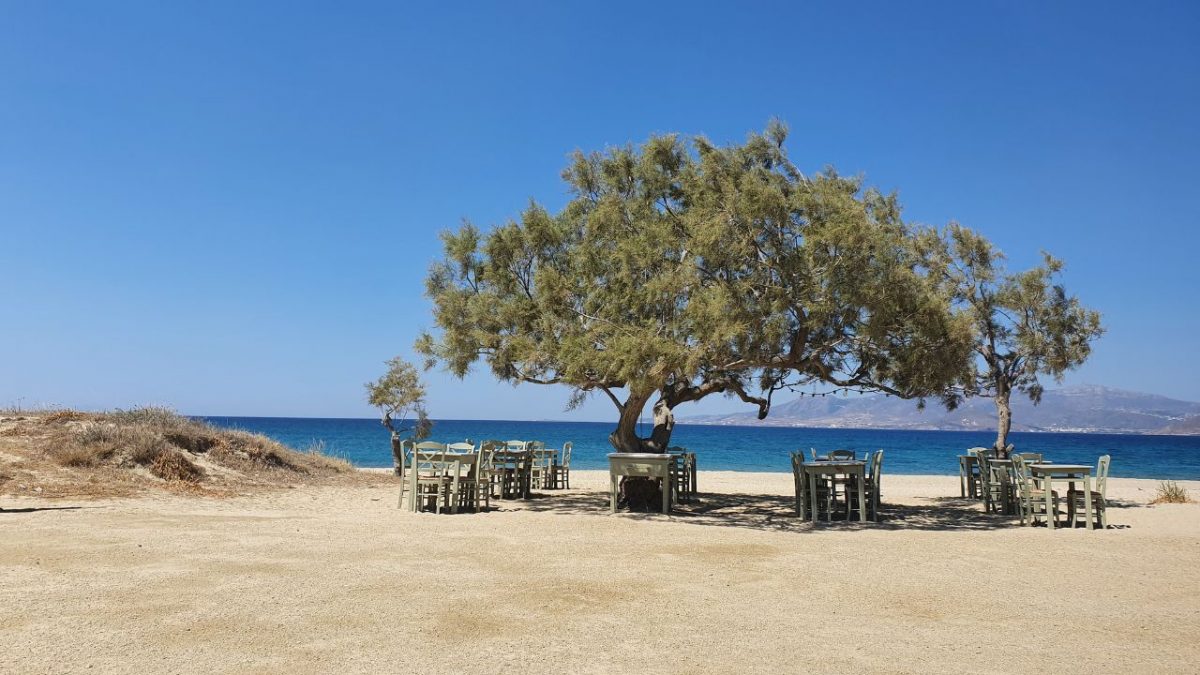
Naxos is the largest island in the Cyclades and arguably the most self-sufficient. Unlike Mykonos or Santorini, Naxos produces enough food — cheese, potatoes, citrus, meat — to sustain its population independently of tourism. The interior is mountainous and largely agricultural, with Venetian tower-houses dotting the hillside villages. The beaches on the western coast, particularly around Agios Prokopios and Plaka, are among the best in the Cyclades.
Paros
Paros sits near the centre of the Cyclades and works well as a base for island hopping. It has good ferry connections in multiple directions, a pleasant main town (Parikia), and the picturesque fishing village of Naoussa in the north. Paros marble was used in classical antiquity for some of the most important sculpture of the ancient world. Antiparos, a short ferry ride away, is a smaller and quieter alternative with a famous stalactite cave.
Milos
Milos is a volcanic island with some of the most striking coastal scenery in Greece. The coloured rock formations, sea caves, and beaches like Sarakiniko — where lunar white rock meets turquoise water — have made it one of the fastest-growing destinations in the Cyclades. The Venus de Milo, now in the Louvre, was found here in 1820.
Ios
Ios sits between Paros and Santorini and has long been associated with younger travellers and budget island hopping. It has improved significantly in recent years, with better accommodation options alongside its well-established bar scene. The main town is perched on a hill above the port; the beach at Mylopotas is long and sandy.
Folegandros and Sifnos
These two smaller islands attract travellers looking for a calmer experience. Folegandros has a dramatically sited Chora on a cliff edge and limited development — deliberately so. Sifnos is known for its food (it has produced several notable Greek chefs) and its pottery tradition. Neither has an airport; both require a ferry journey to reach.
Cyclades Island Hopping
Island hopping in the Cyclades is practical and well-established. The ferry network connects most inhabited islands to each other and to the mainland, and in high season (June to September) services are frequent enough to move between islands every few days without much planning difficulty.
A typical Cyclades island hopping route might run: Athens (Piraeus) — Paros — Naxos — Ios — Santorini, or branch westward to Milos and Sifnos. The islands in the eastern Cyclades — Amorgos, Donoussa, Iraklia, Schinoussa — are quieter and require more careful planning around ferry schedules.
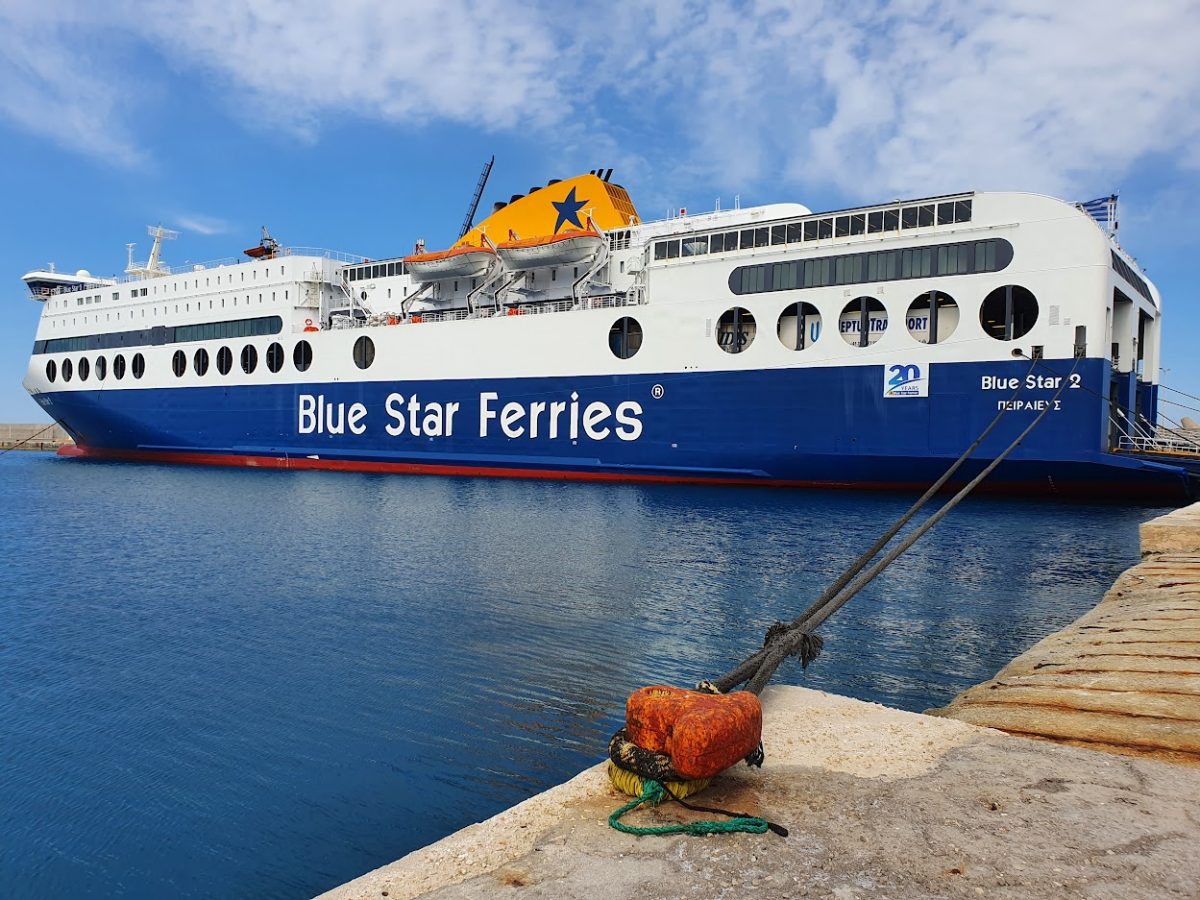
For searching and booking ferry routes across the Cyclades, Ferryscanner lets you compare operators, departure times, and ticket classes in one place. It covers all the major Cyclades ferry routes including the less obvious inter-island connections.
Suggested Island Hopping Routes
- Classic route (7–10 days): Piraeus — Paros — Naxos — Ios — Santorini. This covers the most popular islands with minimal backtracking.
- Western Cyclades (5–7 days): Piraeus — Kea or Kythnos — Serifos — Sifnos — Milos. Quieter, fewer crowds, good for those who want to avoid the main tourist circuit.
- Northern Cyclades (4–6 days): Rafina — Andros — Tinos — Mykonos. This route uses Rafina port (northeast of Athens) rather than Piraeus, which is more convenient if you’re arriving from the airport. The Andros to Mykonos ferry is a short hop and runs regularly.
- Small island circuit (7–10 days): Paros — Antiparos — Folegandros — Sikinos — Ios — Amorgos. Best for experienced island hoppers comfortable with variable schedules.
Getting to the Cyclades
By Ferry from Athens
The main gateway to the Cyclades is Piraeus port in Athens. Ferries to Santorini, Mykonos, Paros, Naxos, Ios, Milos, and most other Cyclades islands depart from Piraeus throughout the year, with significantly more sailings in summer. Journey times vary: Mykonos takes around 2.5 hours by high-speed ferry or 4.5–5 hours by conventional ferry; Santorini takes around 5 hours high-speed or 8+ hours conventional.
Rafina is a secondary ferry port east of Athens, closer to the international airport. It serves the northern Cyclades — Andros, Tinos, Mykonos — and is worth using if you’re heading to those islands on arrival without going into central Athens first.
By Air
Santorini and Mykonos have international airports with direct flights from many European cities during summer. Paros, Milos, Naxos, and Syros have smaller airports served mainly by domestic routes from Athens. Most other Cyclades islands have no airport and are accessible only by sea.
Booking Ferries
You can book Cyclades ferries online in advance through Ferryscanner, which aggregates routes from multiple operators including Blue Star Ferries, SeaJets, Golden Star Ferries, and Aegean Speed Lines. In July and August, booking ahead for popular routes — especially Piraeus to Santorini or Mykonos — is advisable, particularly if you want a cabin or a vehicle space.
When to Visit the Cyclades
The peak season runs from late June through August. This is when all ferry routes are operating at full frequency, all hotels are open, and beaches and towns are at their most crowded. Prices are highest in peak season.
May, June, and September offer a better balance: good weather, reasonable ferry connections, fewer crowds, and lower prices. May is particularly pleasant — warm enough for swimming in the southern Cyclades, comfortable for walking and sightseeing everywhere.
The shoulder months of April and October are viable for the larger islands but many businesses on smaller islands close down. November through March sees minimal tourist activity across most of the Cyclades, with ferry services reduced to weekly or twice-weekly on some routes. Syros, as the administrative capital of the Cyclades, operates year-round normally.
Practical Notes for Travelling the Cyclades
- Ferry punctuality: Ferries in Greece run on schedule more often than the stereotype suggests, but weather — especially the strong Meltemi wind that blows across the Aegean in summer — can cause delays and cancellations. Build in flexibility if you have a flight to catch.
- Accommodation: Book well ahead for Mykonos and Santorini in July and August. On smaller islands, options are limited even outside peak season.
- Cash: Most places accept cards, but smaller islands, small tavernas, and local bus services may be cash only. ATMs exist on all inhabited islands, though not always reliably stocked in peak season.
- Getting around each island: Larger islands have bus networks. Smaller islands may have only one bus or none at all. Renting a scooter, ATV, or car is common and practical on most islands.
- Meltemi wind: The Meltemi is a dry northerly wind that blows through the Aegean from roughly July to mid-September. It makes the heat bearable but can make sea crossings rough and some beaches uncomfortable. Islands on the northern side of their respective landmasses tend to be more exposed.
FAQ: Cyclades Islands Guide
How many islands are in the Cyclades?
The Cyclades archipelago contains around 220 islands, islets, and rocky outcrops in total. Of these, approximately 24 are permanently inhabited. The rest are uninhabited and range from sizeable but unpopulated islands to bare rocks barely above sea level.
What is the best base for Cyclades island hopping?
Paros is often recommended as a central base because of its strong ferry connections in multiple directions — north to Mykonos, south to Ios and Santorini, west to Milos. Naxos is an alternative, offering more to do on the island itself while still having good ferry links. For the northern Cyclades, Mykonos is the main hub.
How do I get to the Cyclades from Athens?
The main route is by ferry from Piraeus port in Athens. High-speed ferries reach Mykonos in around 2.5 hours and Santorini in around 5 hours. Conventional ferries take longer but are cheaper and often operate overnight. Rafina port, east of Athens, is better for Andros, Tinos, and Mykonos if you’re coming directly from Athens airport.
What is the best time of year to visit the Cyclades?
May, June, and September offer the best combination of good weather, manageable crowds, and reasonable prices. July and August are peak season with the most services running but also the most tourists and highest costs. April and October are viable for larger islands but quieter and with some businesses closed.
Which Cyclades islands are best for families?
Naxos is widely considered the best Cyclades island for families: long sandy beaches, calm shallow water, a good range of accommodation, and enough to do on the island. Paros is also family-friendly. Mykonos and Santorini, while accessible, are primarily geared toward adult visitors and tend to be more expensive.
Can I book Cyclades ferry tickets online?
Yes. Ferryscanner and other booking platforms allow you to search and book ferry routes across the Cyclades in advance. Booking ahead is strongly recommended for high-season travel on popular routes, particularly if you need a cabin or are travelling with a vehicle. Many operators also sell tickets at the port on the day, but availability is not guaranteed in peak season.