Useful Resources for Your Greek Island Trip
- Find accommodation in Greece – hotels, apartments and villas on Booking.com
- Book tours and activities in Greece via Viator
- Find guided experiences and day trips via GetYourGuide
- Compare car hire prices in Greece via DiscoverCars
Greece has dozens of ferry companies running hundreds of routes across the Aegean and Ionian seas, which makes planning ferry trips in Greece complicated — but booking aggregators make the whole process far more manageable.
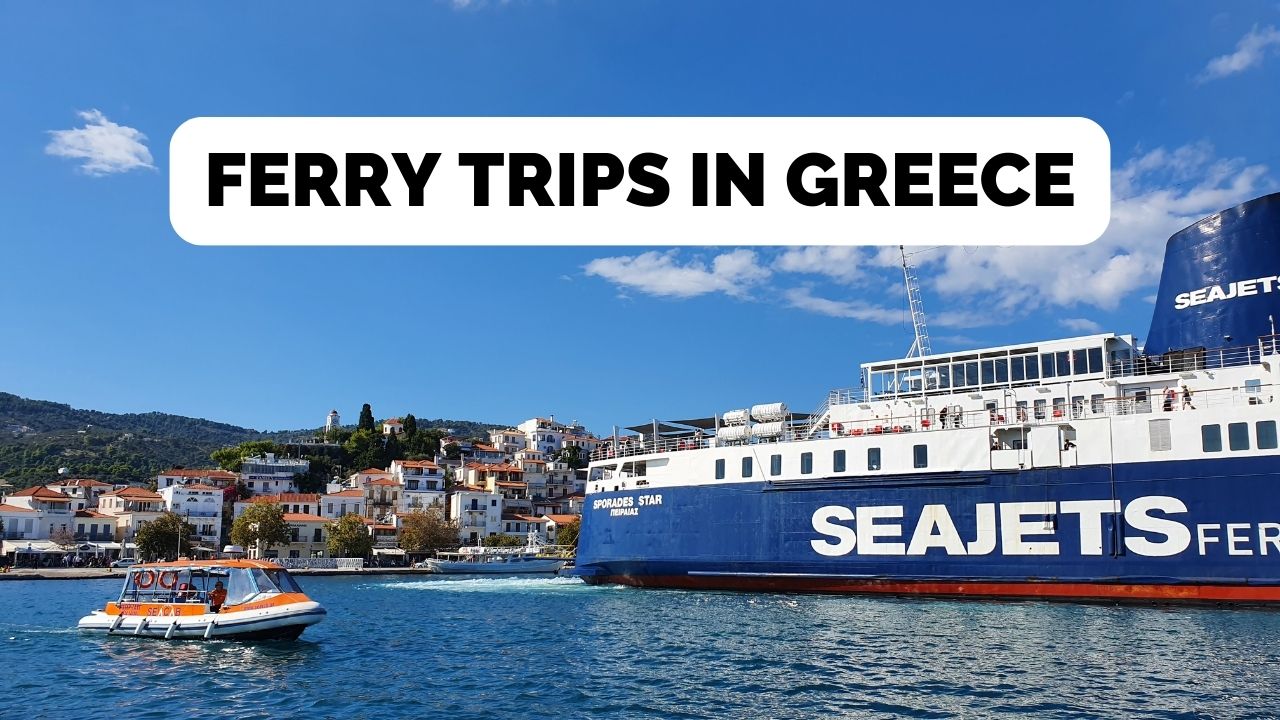
Whether you’re island hopping through the Cyclades islands, heading south to the Dodecanese islands, or crossing to the Ionian islands, the Greek ferry network is one of the most extensive in Europe. The challenge isn’t finding a boat — it’s figuring out which company runs which route, on which days, with what type of vessel, at what price. That’s where the right booking approach saves you a lot of time. Our Greek Island Hopping by Ferry guide covers the wider planning picture if you’re building a multi-island itinerary.
How to Book Ferry Tickets in Greece
There are three main ways to book Greek ferry tickets:
- Direct from the operator — Each ferry company has its own website. This works if you already know exactly which company serves your route, but it means visiting multiple sites to compare options.
- At the port ticket office — Possible for shorter, less busy routes, but risky in summer when boats fill up. Not recommended for peak season travel.
- Online booking aggregators — Search across all operators at once, compare schedules and prices, and book in a single transaction. This is the practical choice for most travellers.
Unless you’re making a simple repeat journey on a well-known route, booking through an aggregator is the most sensible approach. You get a complete picture of what’s available rather than a patchwork view built from visiting a dozen individual websites.
Best Ferry Booking Sites for Greece
Ferryscanner
Ferryscanner is the primary recommendation for booking Greek ferry tickets online. It covers virtually all major Greek ferry companies in a single search, shows real-time availability, and displays pricing transparently so you can compare options side by side. The interface is clean and straightforward — enter your departure port, destination, and date, and you’ll see every available crossing with prices, journey times, and vessel types.
One of the key advantages of Ferryscanner is being able to compare fast ferries against conventional overnight boats on the same route, which can mean the difference between a 2-hour crossing and an 8-hour one at a very different price point. It handles both same-day bookings and advance purchases, and e-tickets are issued immediately. If you’re only going to use one site for planning a Greek island hopping trip, make it this one.
Ferryhopper
Ferryhopper is a solid alternative that also covers most major Greek ferry operators. Its interface is slightly different — some travellers find it easier to visualise multi-leg island hopping itineraries here, as it presents routes in a more map-oriented way. Coverage is comparable to Ferryscanner for the most popular Aegean routes. Worth checking if you want a second opinion on pricing or prefer the way the search results are presented.
Both platforms are legitimate and well-established. The honest answer is that for most routes, prices won’t differ dramatically between them. It’s worth doing a quick search on both for more expensive or complex itineraries, but either will serve you well for standard Cyclades or Dodecanese routes.
If you do want to book direct, the main companies — Blue Star Ferries, ANEK Lines, SeaJets, and others — all have their own websites. The downside is that you can only see one company’s offerings at a time, which makes it harder to assess whether you’re getting the best schedule or price for your route.
Greek Ferry Companies: Who Operates What
Understanding the main operators helps you know what to expect when a ferry booking comes up in search results. Here’s a rundown of the key Greek ferry companies and the routes they serve.
Blue Star Ferries is the largest conventional ferry operator in Greece. It runs large car ferries on the main Cyclades routes from Piraeus, as well as services to the Dodecanese and Crete. Boats are comfortable and reliable, with cabins available on longer overnight runs. Journey times are longer than high-speed alternatives, but the ships are spacious and capable of carrying vehicles.
Hellenic Seaways operates both conventional and high-speed ferries, with a particular focus on the Cyclades and Sporades islands. Its high-speed vessels cut journey times significantly compared to conventional boats on the same routes.
SeaJets runs high-speed catamarans and is one of the faster options for Cyclades routes. Journey times are among the shortest available, which is appealing — but high-speed services are more susceptible to cancellation or delay in rough weather, which is worth factoring in if you’re travelling in shoulder season or early spring.
ANEK Lines is a major player on overnight routes to Crete, particularly from Piraeus. Long-haul conventional ferries with cabin options, good for travellers who want to travel overnight and arrive refreshed rather than lose a day to a daytime crossing.
Minoan Lines also serves Crete on overnight routes and is known for higher-comfort vessels on the Piraeus–Heraklion run. Often a good choice if cabin quality matters to you.
Golden Star Ferries operates out of Rafina ferry port, east of Athens, serving the northern Cyclades. Rafina is closer to the airport than Piraeus, making Golden Star a convenient option if you’re connecting directly from a flight to islands like Mykonos or Naxos.
Aegean Speed Lines covers the western Cyclades with high-speed services, reaching islands like Serifos, Sifnos, and Milos. A useful option for routes where conventional ferry frequency is lower.
Anes Ferries serves the Sporades — Skiathos, Skopelos, Alonissos — from ports in central Greece. Relatively straightforward routes with good frequency in summer.
Levante Ferries operates in the Ionian Sea, connecting mainland ports with Ionian islands. Coverage has expanded in recent years and it’s a reliable option for western Greece ferry routes.
Kerkyra Lines / Ionian Ferries run short crossings between Igoumenitsa on the mainland and Corfu, as well as other Ionian routes. These are frequent, quick services rather than long-haul crossings.
Tips for Booking Greek Ferries
- Book early in summer. July and August sailings — especially on popular routes like Piraeus to Mykonos or Santorini — sell out weeks in advance. Don’t assume you’ll sort it out when you arrive.
- High-speed vs conventional: know the tradeoffs. High-speed ferries are faster but more expensive, less comfortable in choppy seas, and more likely to be cancelled in bad weather. Conventional overnight ferries are slower but often the right choice for longer crossings to Crete or Rhodes.
- Check vehicle surcharges. Taking a car on a Greek ferry adds significantly to the cost. Always search with and without a vehicle to understand the full price, and factor in that some smaller island ports have limited space for vehicles.
- E-tickets are standard. Both Ferryscanner and Ferryhopper issue e-tickets you can show on your phone. No need to collect physical tickets at the port in most cases, though it’s worth double-checking for any operator that may require a port check-in.
- Check which Athens port you need. Most ferries leave from Piraeus, but some routes — particularly to the northern Cyclades and Evia — depart from Rafina. These are different ports, so confirm before booking and allow time to get to the right one.
- Multi-leg trips require planning. If you’re island hopping across several islands, not every pair of islands has a direct connection. Build in buffer time between legs in case of delays, particularly if you have onward travel booked.
Ferry Companies FAQ
What is the best ferry company in Greece?
There’s no single “best” Greek ferry company because different operators serve different routes and vessel types. Blue Star Ferries is the most extensive conventional operator for the Aegean. SeaJets and Hellenic Seaways are strong for high-speed services in the Cyclades. For Crete overnight routes, ANEK Lines and Minoan Lines are both well-regarded. The practical answer is to search by route on Ferryscanner and pick the option that suits your timing, budget, and comfort preferences.
Where can I book Greek ferry tickets online?
The best approach for most travellers is to use a booking aggregator. Ferryscanner is the top recommendation — it covers all major Greek ferry operators, shows real-time availability, and lets you compare schedules and prices across companies in one place. Ferryhopper is a good alternative. You can also book ferry tickets greece directly through each company’s own website, but that requires knowing which company serves your specific route.
Is Ferryscanner or Ferryhopper better?
Both are legitimate platforms with good coverage of Greek ferry routes. Ferryscanner has a slight edge on comprehensiveness and interface clarity for straightforward route searches. Ferryhopper has a more visual layout that some users prefer for planning multi-stop itineraries. For most travellers, either will work well — it’s worth checking both if you’re booking an expensive multi-leg trip, but for standard routes the results will be similar.
Do I need to book Greek ferries in advance?
For summer travel (June–September), yes — especially on busy routes and for any overnight crossings where you want a cabin. Popular routes to Santorini, Mykonos, and Rhodes can sell out weeks ahead. For shoulder season (May, October), there’s more availability, but advance booking is still sensible. Winter schedules are reduced and less likely to sell out, but you should still confirm availability rather than assuming.
Can I take a car on Greek ferries?
Most conventional Greek ferries carry vehicles, including cars, motorcycles, and campervans. High-speed catamarans generally do not. If you’re planning to take a vehicle, search specifically for car ferry options and book early — vehicle spaces are more limited than passenger seats and sell out faster in summer. Factor in that the vehicle surcharge can significantly increase the ticket price.
What is the cheapest ferry company in Greece?
Pricing varies by route, season, and how far in advance you book rather than by company alone. Conventional ferries are generally cheaper than high-speed options on the same route. The best way to find the lowest price is to search on Ferryscanner across all operators for your specific route and travel dates — you’ll see the full range of prices in one place and can pick accordingly.